
A splash of tea, biscuit crumbs from a long puzzle session, or fingerprints on a finished display should not spell disaster. One of the real pleasures of premium plastic puzzling is that you can clean plastic puzzle pieces far more confidently than traditional cardboard ones - provided you use a gentle method and give every piece time to dry properly.
Unlike cardboard puzzles, waterproof plastic puzzles are made for repeat enjoyment, handling and display. Their firm, interlocking construction means a completed picture can often be lifted, moved and showcased without glue. That durability is brilliant, but it does not mean every cleaning method is a good idea. Heat, harsh chemicals and rough scrubbing can still affect the printed surface, the puzzle fit or decorative components.
Before You Clean Plastic Puzzle Pieces
Start by working out what actually needs cleaning. A few loose crumbs or surface dust call for a very different approach from a sticky spill. If the puzzle is completed, decide whether it is safer to clean it as one assembled image or take it apart first. Well-fitted plastic puzzles can often stay together for gentle surface care, while a spill caught between pieces may need a more thorough clean.
Set up on a clean, flat table with a dry towel nearby. Avoid cleaning over a sink with an open drain, especially with mini pieces, children’s puzzles or detailed 3D models. Good lighting helps too: it is much easier to spot moisture around joins before putting pieces away or returning a puzzle to its frame.
For ordinary dust and marks, you only need lukewarm water, a soft microfibre cloth and, if needed, a small amount of mild dishwashing liquid. Keep the cloth damp rather than dripping wet. This is a care routine, not a soak.
The Best Method for Everyday Puzzle Care
For a completed 2D plastic puzzle, begin with a dry microfibre cloth or a very soft brush. Move lightly across the surface to lift dust, paying special attention to the outer edge and any framed areas. A soft, clean makeup brush can be handy for small corners, but do not use a stiff household brush that may scuff the finish.
If fingerprints or a light smudge remain, dampen a microfibre cloth with lukewarm water and wring it out thoroughly. Wipe with gentle, even strokes, rather than rubbing one spot firmly. Follow straight across a section of the picture, then use a second dry cloth to remove any remaining moisture.
For a sticky mark, add only a tiny drop of mild dishwashing liquid to the water. Test the damp cloth on an inconspicuous edge piece first, particularly if the puzzle has metallic details, a special finish or raised decorative elements. Wipe the affected area, then go over it again with a separate cloth dampened only with clean water so no detergent film is left behind.
Let the puzzle air-dry flat in a well-ventilated room before framing, packing it away or standing it upright. Do not rush the process with a hair dryer, heater or direct hot sun. High heat can cause warping, and drying a puzzle vertically while moisture sits in the joins can leave marks where you do not want them.
Cleaning loose pieces after a spill
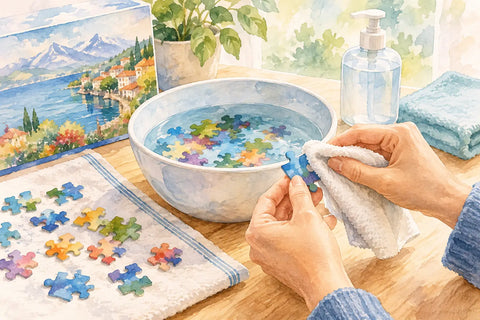
When a drink or food spill has reached individual pieces, separate the affected pieces carefully. Wipe each one with a lightly damp cloth, clean-water wipe if required, then dry both sides. Place them picture-side up on a towel with a little space between each piece.
It is tempting to rinse pieces under a running tap because plastic is water resistant. However, a controlled wipe is usually the smarter first choice. It uses less water, protects any decorative finish, and stops tiny pieces from disappearing down the drain. If you do rinse a sturdy waterproof piece, use cool to lukewarm water, keep the pressure gentle and dry it straight away.
Do not reassemble until the pieces are completely dry. Even a trace of trapped moisture can transfer to packaging, puzzle mats or backing boards. A few extra hours on the towel is far better than discovering a damp patch after everything has been packed up.
Care for 3D Puzzles, Vases and Display Pieces
A 3D puzzle vase, planter, clock or globe deserves slightly different treatment. These designs are built to be admired as functional décor, so regular dusting is often all they need. Use a soft dry cloth on the outer surface and around any joins. For tight details, a soft brush is useful.
If the exterior needs a deeper clean, wipe it with a well-wrung damp cloth and dry immediately. Keep water away from clock mechanisms, battery compartments, fitted bases, light components and any non-plastic attachments. Remove internal inserts or mechanisms only if the product instructions allow it.
For puzzle vases and planters, do not assume that a puzzle-built decorative vessel should be treated like a standard kitchen container. Whether it can hold water, needs an internal liner, or is best used with dried flowers depends on its specific design. Clean the outside gently and follow the care guidance supplied with that item.
What Not to Use on Plastic Puzzle Pieces
Plastic is durable, but the image layer and precision-cut connections deserve kindness. Avoid abrasive sponges, scouring powders, bleach, alcohol-based cleaners, window sprays, acetone and strong multi-purpose cleaning products. These can dull the surface, fade printed colour or leave pieces feeling less pleasant to handle.
Skip the dishwasher as well. Hot water, strong detergent and high-pressure jets are unnecessary risks for puzzle pieces, even when they are marketed as waterproof. The same goes for prolonged soaking. Water resistance makes everyday accidents far less stressful; it is not an invitation to give your favourite puzzle a bath.
Paper towels can work in a pinch, but a soft microfibre cloth is the better choice. Paper fibres may catch on detailed edges, while textured cloths can leave fine scratches over time. If a piece has something stuck to it, resist picking at it with a fingernail or tool. Hold a damp cloth over the spot briefly, then wipe gently once it has softened.
Keep Your Finished Puzzle Looking Display-Ready
The easiest cleaning job is the one you prevent. Build on a clear, dry surface and keep drinks at a sensible distance from the puzzle zone. If puzzling is a family activity, a tray or puzzle mat can help keep pieces together between sessions and reduce dust, pet hair and accidental bumps.
Once finished, display your puzzle away from direct sunlight, steamy bathrooms and damp windowsills. Sunlight can affect printed colour over time, while changing temperatures and humidity are unhelpful for frames, backing materials and surrounding décor. Plastic pieces themselves are wonderfully practical, but the way you display them still matters.
For collectors, it is worth retaining the original box or storing spare pieces in a labelled zip pouch inside it. Clean, fully dry pieces are easier to sort, swap and revisit later. This is especially useful for mini puzzles, puzzle cards, magnets and children’s sets that may be enjoyed again and again.
At Puzzle Art Store, premium plastic puzzles are chosen for the kind of everyday enjoyment cardboard cannot always handle: hands-on play, repeat building, easy display and gift-worthy finishing. No glue needed, water resistant and made to become part of your space - that is a puzzle worth caring for.
A quick gentle wipe after a spill, a dry cloth before display, and a little patience while pieces air-dry will keep the artwork crisp and the connections satisfying for many more sessions. Your finished puzzle can stay exactly where it belongs: out on show, not hidden away.



Comments (0)
There are no comments for this article. Be the first one to leave a message!