
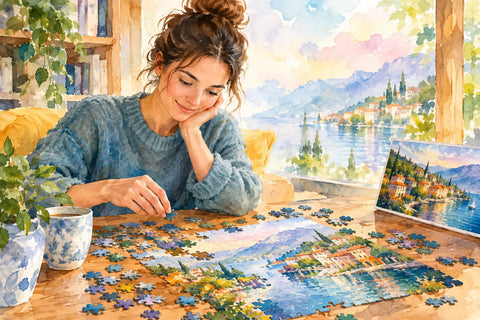
A half-finished puzzle on the dining table can look like a mess to one person and a welcome invitation to another. There is a small decision waiting in every loose piece: sort it, rotate it, test the colour, or save it for later. The real puzzle hobby benefits sit in that repeatable, hands-on ritual - and in the satisfaction of seeing hundreds of separate pieces become one finished image worth keeping.
For many people, puzzling is not about racing to the final piece. It is a screen-free way to give the mind a clear job, the hands something purposeful to do, and the home a little more colour. Choose a well-made plastic puzzle and the enjoyment can continue after completion, whether it is framed, displayed on a shelf, or built into a functional 3D piece.
Puzzle hobby benefits for focus and everyday calm
A puzzle gives your attention a useful place to land. Rather than asking you to juggle messages, errands and tabs on a mobile, it narrows the task to visual clues: a curve in the edge, a patch of sky, a repeated pattern, a missing shade of green. That gentle concentration can make a session feel restorative, particularly after a busy day.
The value is not that a puzzle removes every thought. It is that it offers a manageable problem with visible progress. You might start by sorting border pieces, group colours into trays, then find that one surprisingly satisfying connection. Each small win encourages you to keep going without demanding the pressure of a deadline.
Puzzles can also help create a better wind-down routine. A 15-minute session after dinner is often more calming than scrolling through another stream of content. The pace is yours: work steadily through a 1,000-piece landscape over several evenings, or complete a small puzzle card while the kettle boils. Neither approach is more correct.
There is a trade-off, of course. A highly detailed design or a large piece count can be wonderfully absorbing, but it may feel frustrating when time is short or concentration is low. On those days, a smaller format, clearer colour blocks, or a familiar subject can make the hobby feel inviting rather than like another task on the list.
A creative hobby with a finished result
Unlike some pastimes, puzzling leaves you with more than a pleasant memory. The completed image becomes a visual achievement - proof of patience, observation and persistence. That matters even more when the puzzle is designed to be displayed rather than packed straight back into its box.
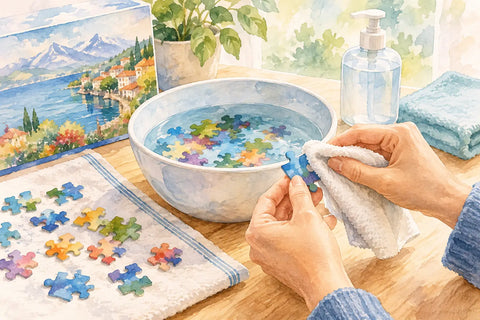
Premium plastic pieces bring a practical advantage here. Their firm interlocking construction helps the finished puzzle hold together, so there is no need to reach for glue before moving or framing it. Water-resistant pieces are also reassuring in real homes, where a drink bottle, curious child, or enthusiastic pet can make a cardboard puzzle feel unexpectedly fragile.
A completed puzzle can suit far more spaces than a dedicated games room. Botanical artwork can brighten a hallway, a city scene can add interest to a study, and a colourful illustration can bring personality to a child’s bedroom. It is décor with a story behind it: visitors see the finished artwork, while you remember the evenings spent finding the last difficult section.
Three-dimensional puzzles take that idea further. A puzzle vase, planter, clock or globe turns assembly into a useful object with a place in the home. They are especially appealing for people who enjoy making things but do not necessarily want another craft project that needs paint, tools or a permanent workspace.
Puzzles make shared time easier
Family activities are not always as simple as sitting everyone down and hoping for instant enthusiasm. Puzzles work because people can join at different levels. One person can sort edges, another can hunt for bright colours, and a younger puzzler can focus on the most recognisable part of the picture. There is room for conversation, quiet concentration and the occasional triumphant "I found it!".
That flexibility makes puzzling useful across generations. Grandparents can work alongside grandchildren without anyone needing to learn complicated rules. Couples can share a project across several nights. Flatmates can leave a puzzle on a spare table and contribute whenever they have a few minutes. The puzzle gives everyone a common purpose without making the evening feel overly organised.
For children, the appeal is both playful and practical. Matching shapes, noticing colours and turning pieces to test a fit all encourage observation and fine motor control. The key is choosing a puzzle that suits their age and patience. A beautifully illustrated junior puzzle with a sensible piece count builds confidence; one that is too difficult may only build frustration.
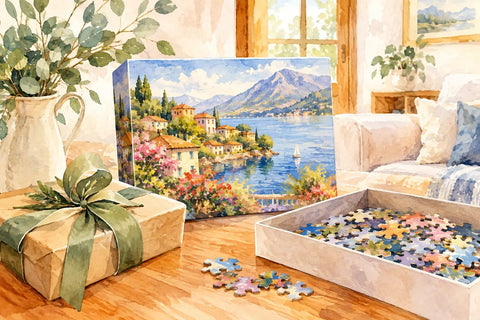
Gift buyers can use the same principle. A puzzle is more personal than a generic present when the theme reflects someone’s interests - animals, travel, art, flowers, vehicles or a favourite photo. Customised puzzle gifts add another layer, turning a shared memory into an activity first and a keepsake afterwards.
The satisfaction of collecting, not cluttering
A good puzzle hobby can grow with you. Beginners might prefer manageable piece counts and bold artwork, while experienced puzzlers may seek intricate illustrations, unusual shapes or larger challenges. Collectors often enjoy discovering new artists, limited designs and formats that feel different from a standard flat jigsaw.
That does not mean every completed puzzle needs to stay on display forever. Some are perfect to rebuild, lend to a friend, or carefully pack away for another season. The difference with a durable, display-ready puzzle is choice. You can keep the design intact when it deserves a place on the wall, rather than feeling forced to dismantle it because the pieces will not hold.
Storage also deserves thought. If you are working on a puzzle over several days, choose a flat, low-traffic surface and keep the box image nearby. Sorting trays or small containers reduce the hunt for a particular colour group. If the dining table needs to return to dinner duty, a puzzle mat or board can make it easier to move the project without losing your progress.
For a finished piece, consider its purpose before choosing the design. A striking 2D artwork may be ideal for framing. A compact mini puzzle can make a cheerful desk display. A 3D functional puzzle makes sense when you want the completed object to earn its spot on a shelf or sideboard. Matching the format to the destination makes the hobby feel less temporary from the start.
Choosing a puzzle you will genuinely enjoy
The best puzzle is not automatically the one with the highest piece count. Start with the experience you want. If you are craving a quiet solo challenge, select a detailed image with enough variation to keep the sorting interesting. If you are buying for family time, look for a design where several sections are easy to recognise and share.
Material matters too. Traditional cardboard puzzles have their place, particularly for casual use, but plastic puzzles suit people who value crisp interlocking pieces, durability and display potential. They can be a particularly smart pick for gifting, young households, and anyone who wants an assembled puzzle to become part of their home rather than a one-weekend diversion.
At Puzzle Art Store, the appeal is simple: premium puzzle designs can be enjoyed piece by piece, then shown off with no glue needed. Whether you choose a collectible 2D artwork, a child-friendly design, or a functional 3D creation, the right puzzle earns its place long after the final piece clicks in.
Set aside a corner of the table, choose an image you would be happy to live with, and let the next puzzle become both your pause button and your next piece of art.

Comments (0)
There are no comments for this article. Be the first one to leave a message!